Take Back Control of your Health Plan with HCRM’s Analytics
Our Predictive Analytics will help you improve member health and reduce overall costs.
Welcome to Health Cost & Risk Management, LLC
At HCRM, we are committed to helping improve the health and well-being of as many people as possible. Using our proprietary software, we predict clinical events and associated costs with various health outcomes at the member level. This advanced system forecasts healthcare spending, identifies at-risk members, and measures outcomes of health management or wellness programs. Ultimately, we help you make informed decisions that improve the health of your members and reduce your spending.
HOW We Help
WHO We Help
Utilizing AI-driven technology for personalized risk solutions.
Clinical Predictive Modeling
Our technology identifies member and group clinical and financial risks through clinical predictive modeling. It forecasts the likely clinical events arising from each individual's specific health conditions. It summarizes future claims costs in dollars as the primary measure of clinical risk. The forecasts and related metrics can quickly identify the high-cost members and conditions that can be addressed before claims are incurred.
Care Management Solution
HCRM offers an end-to-end solution from predictive data aggregation to risk profiling and care management workflows - everything needed to improve patient outcomes right at your fingertips with a single login. Our clients can implement strategies to act on the data driven insights that will impact overall cost with the least amount of resources.
Data Normalization and Validation
We strive for clarity and accuracy through data normalization, ensuring reliability by eliminating mistakes and formatting data for easy understanding and actionable insights. Thorough data validation, assessing integrity and structure, guarantees industry-leading accuracy across our reports.
Stop-Loss Reporting
Our Stop Loss reports safeguard against high-risk financial losses by identifying members with significant medical risks before claims are incurred. Now you can proactively address these risks and help maintain financial stability.
It’s Easy to Get Started
Try Our Solution for Free
Are you interested in trying our solution out for free? HCRM will collect all medical and pharmacy claims to process through our AI driven predictive model to demonstrate the power of this actionable information.
By submitting this form, you are consenting to receive marketing emails from: Health Cost & Risk Management, LLC. You can revoke your consent to receive emails at any time by using the SafeUnsubscribe® link, found at the bottom of every email. Emails are serviced by Constant Contact
What Our Clients Say
 Michael MitchellHCRM is a great organization to work with. I've been working with HCRM for the past 17 years, and in my experience there is no stronger technology platform out there in the medical AI, predictive modeling space. Bill Bramble and the leadership team are dedicated to their clients and are constantly innovating to lead the next generation of predictive modeling tools. The application of of their technology is wide and broad from health systems, onsite clinic operators, care management/health improvement specialists, underwriting, payors,and healthcare finance professionals. Most importantly, the HCRM platform is intuitive, easy to navigate, and produces powerful actionable data to help solve the biggest challenges in healthcare today.Melissa SowersEasy to navigate systems and services.David ChiappinoMy experience with HCRM has been outstanding! The data is well organized and insightful. The support team is knowledgeable and available. Frequent updates keep the user experience fresh and meaningful. I will continue to recommend HCRM to my colleagues!Ron JanetzkeHCRM has been a critical component in my work for the past 4 years that I've been working in the medical management space. Not only is their product top-notch, but the customer service of their people has exceeded my expectations!




News And Resources

IDENTIFYING MEMBERS NEEDING INTERVENTION PRIOR TO PROJECTED INCREASE IN COST

HCRM PLATFORM TO INCLUDE COVID-19 REPORTING

IMPACT OF PREDICTIVE ANALYTICS

ANNOUNCING HCRM’S SOC 2 CERTIFICATION
Why Choose HCRM?
Accurate Predictions
By utilizing the most advanced AI-driven Predictive Modeling and Forecasting available, HCRM can provide reliable data analysis for companies of all sizes. Our model is regarded as the most accurate claims-based model available in the healthcare market, meaning you can trust in the accuracy of our forecasts. Your business could be benefitting from the best that modern technology has to offer.
Measuring Risks in Dollars
Risk analysis is only helpful if you can understand what it means. Here at HCRM, we recognize the need to quantify clinical and financial risks in dollars. We take pride in translating clinical risk into understandable and comparable measures, giving you a direct way to understand risk in terms of dollars.
Staying Ahead of Rising Costs
As healthcare costs continue to rise, understanding and addressing future clinical and financial risks is imperative. With HCRM services, employers can limit or avoid the claims with actionable information. We help you identify and understand the members and conditions that are driving your health plan costs so you can implement measures to close gaps in care, improve member health and avoid future claims.
Schedule a Time to Chat With Our Friendly Team
Here at HCRM, we are dedicated to empowering our clients to foster employee health through cutting-edge predictive analytics. If you’re interested in receiving accurate data to move you towards affordable solutions, our team would love to support your journey.
Schedule a demo with our dedicated experts today to learn how our solutions can contribute to the success of your business.
Membership By Forecasted Risk Category
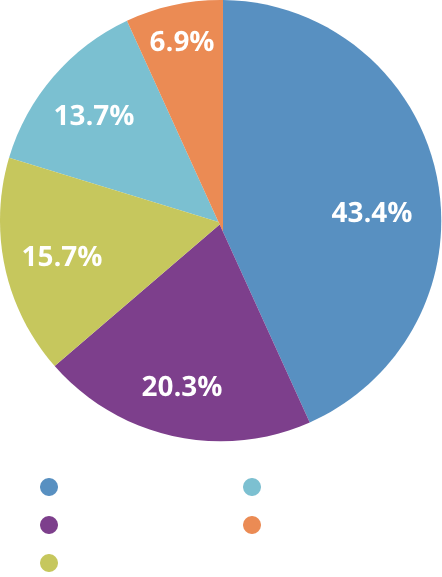
Forecasted Risk Group Distribution